Why do Air Source Heat Pumps use Three-Phase Electricity?
Air source heat pumps are devices that use heat in the air to generate heat energy, and three-phase electricity is a power source composed of three AC potentials with the same frequency, equal amplitude, and phases that are 120° apart. This means that three-phase electricity has three independent AC phases. By the way, two-phase electricity (commonly known as two-phase electricity) is a power source composed of two AC potentials with the same frequency, equal amplitude, and phases that are 180° apart. Two-phase electricity has two independent AC phases.
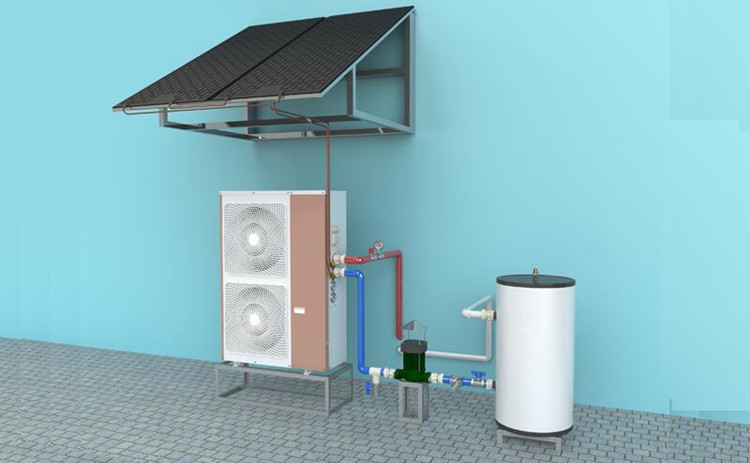
The compressors and fans in air source heat pump systems are usually driven by three-phase motors. Intelligent power modules (IPMs) play a vital role in controlling the power flow of these three-phase motors. IPMs help achieve higher energy efficiency standards by regulating the power supply frequency and voltage of three-phase motors.
Using a combination of three-phase electricity and heat pump inverter technology, air source heat pumps can achieve higher energy saving effects and can reduce energy consumption by about 30% compared to fixed frequency heat pumps. Frequency conversion technology can automatically select heating, cooling and dehumidification operation modes according to the ambient temperature, so that the room can quickly reach the required temperature in a short time, and achieve fast, energy-saving and comfortable temperature control effects with small temperature fluctuations under low speed and low energy consumption conditions.