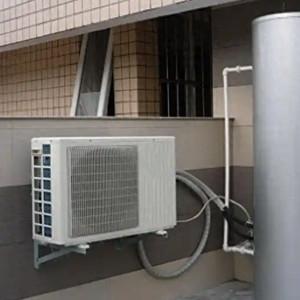
Air Source Heat Pump Advantages and Disadvantages
In most American homes, heating and cooling are the two largest energy consumers. According to the U.S. Energy Information Administration, these two combined account for more than half—52%—of a household's annual energy consumption.
Because heating and cooling represent such a large portion of the energy budget, more and more homeowners are exploring alternatives to traditional gas boilers and air conditioners. Air source heat pumps (ASHPs) are increasingly becoming the preferred choice, and for good reason.
But like any large home investment, heat pumps have both advantages and disadvantages. The following is an objective analysis of the pros and cons of heat pumps to help you determine if it's right for your home.
1. Advantages of Heat Pumps
Using an air source heat pump for home heating and cooling offers many benefits. The following details its main advantages:
1) They are extremely efficient.
This is precisely where heat pumps truly differentiate themselves from other competing products. Unlike traditional gas boilers that burn fossil fuels to generate heat, air source heat pumps transfer heat from the outside air to the interior. This difference is crucial for efficiency.
According to the U.S. Department of Energy, a properly installed air-source heat pump can provide two to four times more heat than the electricity it consumes. In contrast, even the most efficient gas boilers convert less than one unit of fuel into one unit of heat, so you quickly understand why people say heat pumps are as efficient as "300% to 400%".
Higher efficiency translates directly to lower fuel consumption, a smaller carbon footprint, and longer-term energy bills.
2) They can reduce your overall utility bills.
Reducing fuel use helps lower overall energy costs. The amount of savings depends on a variety of factors, including your existing heating or cooling methods, the type of heat pump you install, your location, and your electricity bills.
According to a 2024 study, most homeowners save on their energy bills after switching to an air-source heat pump, and the higher the efficiency, the greater the potential for savings. For example, 62% of homes with the lowest efficiency heat pumps saw savings, while this figure rose to 95% for homes with high-efficiency cold-climate heat pumps.
An earlier study by the Northeast Energy Efficiency Partnership (NEEP) found that homeowners in the Northeast and Mid-Atlantic region saved approximately $459 annually (compared to resistance heaters) and approximately $948 annually (compared to oil-fired stoves) by switching to heat pumps (and heat pump efficiency has only increased since the study was published).
Now, if you have a home solar system and the solar panels generate enough electricity to power an air-source heat pump, you can almost certainly save money with a heat pump. Once the solar system has recouped its costs, your heat pump can run on free electricity. We'll talk more about solar later.
3) They allow you to control the temperature room by room.
If one area of your home is always overheated while another is always chilly, zoned heating and cooling systems will revolutionize your life. Ductless mini-split air conditioning systems allow you to set different temperatures for different rooms or areas. You can keep your bedroom cool at night without making your living room freezing, or simply stop paying for air conditioning in rooms you don't use. This precise control can save you significant amounts of energy over time.
4) They do offer genuine health and comfort benefits.
Air source heat pumps, especially ductless mini-split air conditioners, operate with extremely low noise compared to most traditional HVAC systems. Many models have outdoor noise levels of around 50 decibels and indoor noise levels of only 20 to 40 decibels—almost equivalent to a whisper. For reference, a standard window air conditioner or dishwasher typically operates at around 60 decibels.
Beyond noise, according to Anna Keleher, Senior Consultant for the Americas at the Behavioral Insights Team (BIT), air source heat pumps have actually been shown to reduce health risks. Keleher has conducted numerous studies on heat pumps. She told Energy Sage, “We know that heat pumps can reduce people’s exposure to leaked pollutants like carbon monoxide. They can also improve indoor air quality by increasing air filtration and reducing humidity, thus reducing the likelihood of mold growth. In short, heat pumps can improve the home environment.”
5) They can reduce your carbon footprint
Using electricity for heating and cooling—especially with increasingly cleaner power grids—is more environmentally friendly than directly burning fossil fuels. In areas where the power grid already uses a significant amount of renewable energy, air source heat pumps produce far fewer greenhouse gas emissions per unit of heat compared to gas boilers. As local power grids continue to incorporate renewable energy, the environmental benefits of heat pumps will increase. Gas boilers that burn natural gas or oil cannot achieve this.
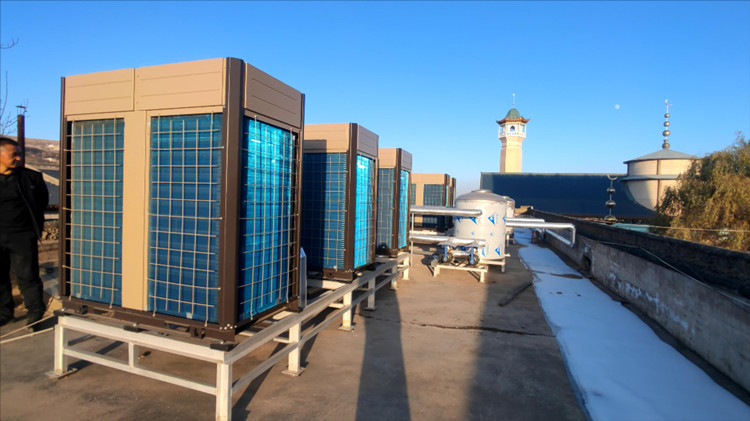
2. Disadvantages of Heat Pumps
While air source heat pumps offer many advantages, they may not be the ideal heating or cooling solution for every home. Here are some disadvantages of heat pumps:
1) Higher upfront costs than traditional systems (to some extent).
Undeniably, the upfront investment for air source heat pumps is generally higher than that for conventional gas boilers or window air conditioners. According to relevant data, the average cost of installing a ducted heat pump is $14,529 (excluding subsidies), while the average cost of a ductless system is $25,957. A hybrid system (combining a heat pump with a gas boiler as a backup system) averages $14,353.
In contrast, the cost of installing a gas or electric boiler typically ranges from $4,000 to $10,000, according to various sources.
However, here's an important tip: an air source heat pump can replace both your heating and cooling systems in one go—the total cost of replacing a boiler and air conditioner is reportedly between $11,500 and $14,100—closer to the cost of installing a heat pump.
Furthermore, considering heat pump incentives (detailed below) and potential savings on energy bills, the gap narrows even further over the system's lifespan.
2) Even if your overall energy costs decrease, your electricity bill may still increase.
Heat pumps rely on electricity to operate. If your home currently uses natural gas for heating, switching to an air source heat pump may increase your electricity bill, even if your gas bill decreases or is eliminated altogether. In areas where electricity prices are significantly higher than natural gas prices, this trade-off can reduce your overall savings—and in some cases, it may even be completely uneconomical (unless you invest in solar panels at the same time).
So, it really depends. If you're replacing your gas, propane, or electric heaters, you're likely to save money overall. But if you're replacing your heating system with a high-efficiency natural gas system, and natural gas prices are low while electricity prices are high in your area, the economics become less clear. Consulting your local HVAC professional and comparing utility rates in your area is the best way to get accurate information.
3) They don't work properly during power outages.
Air source heat pumps require electricity to operate—so if the grid goes out, your heating and cooling systems will stop working. The same is true for gas boilers, which use electronic ignition and controls, so this isn't a problem unique to heat pumps. But it's still important to know this, especially if you live in an area prone to power outages.
The best solution is to combine a heat pump with a solar energy storage system. With a home battery, you can run the heat pump using stored solar energy during power outages, maintaining comfortable temperatures even when the grid is down.
4) Performance in cold weather has always been a limiting factor (though this is changing).
Older air-source heat pumps struggled in extremely cold climates, with efficiency and cooling capacity decreasing as temperatures dropped below freezing. This led many homeowners in the northeastern and northern Midwest of the United States to believe that heat pumps were not suitable for them.
This has largely changed. Cold-climate heat pumps are now designed to operate efficiently at temperatures well below 0°F—some even as low as -23°F.
If you live in an area where sub-zero temperatures are common, a cold-climate air conditioner (or a hybrid air conditioner with a gas boiler as a backup) is worth considering.
5) Installation without a ducted system can present some inconveniences.
If your home doesn't have an existing ducting system, installing a ducted heat pump can be both complex and expensive. Ductless mini-split air conditioning systems are a common alternative, but they require installing indoor units in the walls or ceilings of each room or area, which involves drilling holes and laying refrigerant pipes through the walls. While less intrusive than installing a full ducted system, it's not entirely invisible.
For older homes or homes with limited wall space, aesthetics and installation complexity are factors to consider.
3. Heat Pump Subsidies – A Major Benefit
The high upfront cost of air source heat pumps is one of the most common reasons homeowners hesitate – but it's important to consider another huge advantage – there are usually financial incentives for installing a heat pump.
While the federal tax credit for heat pumps expired after 2025, many states still offer tax refunds and incentive programs. These programs vary by region and may include direct tax refunds, low-interest loans, or other incentives. Before purchasing a heat pump, be sure to find out what incentives are available in your area and don't assume the listed price is the final price you'll pay.
Considering various incentives, heat pump installation costs can typically be reduced by an average of $1,000 to $3,000. The best way to find out which incentives you are eligible for is to obtain multiple quotes and have the installer explain the details of the incentives available in your area.
4. Combining a heat pump with solar panels can save money.
Another major advantage of air source heat pumps is that you can combine them with rooftop solar panels to run your heating and cooling system for free using sunlight.
Solar panels generate free electricity during the day, significantly reducing the operating costs of the heat pump that would otherwise appear on your electricity bill.
This combination also addresses a key drawback: the risk of power outages. Adding a home battery to a solar + heat pump system creates a resilient system that maintains indoor comfort even during grid outages.