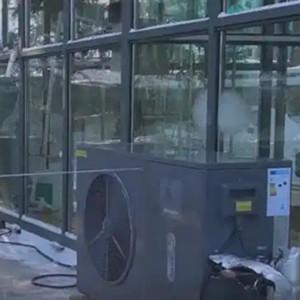
Air Source Heat Pump Pressure Dropping
1. Why does my heat pump keep losing pressure?
One of the most common questions UK homeowners ask after installing a air source heat pump is why the system frequently requires repressurization. While occasional, minor pressure fluctuations are perfectly normal, a system that consistently loses pressure—or requires frequent use of the filling valve—almost certainly indicates an underlying issue that needs investigation and proper resolution. Crucially, simply repressurizing the system without addressing the root cause is not a real solution; it merely masks the problem temporarily, potentially leading to more severe issues and higher repair costs down the line.
2. What is the role of pressure in a heat pump system?
Most heat pump systems in the UK are sealed heating systems that operate on the same principle as modern condensing boilers. System pressure ensures water circulates correctly through the heating circuit, allowing the air source heat pump to run safely and efficiently. If the pressure drops too low, the system may fail to operate properly—displaying pressure or flow fault codes on the controller, struggling to deliver heat to radiators and underfloor heating circuits, or even locking out completely and refusing to start. If you notice a fault code alongside the pressure loss, we recommend reading our article on why heat pumps frequently start and stop, as pressure-related flow faults are a common cause of this behavior.
3. Minor pressure fluctuations can be normal
It is important to note that some fluctuation in pressure within a sealed heating system is entirely normal. Water expands when heated, causing the pressure reading to rise slightly as the system reaches its operating temperature. Conversely, as the system cools down between heating cycles, the water contracts, causing the pressure to drop slightly. This is simply the physical result of water expanding and contracting within a sealed loop and does not indicate a problem. You should see the pressure reading remain relatively stable over time—rising slightly as the system heats up and returning to its initial level as it cools—rather than gradually dropping week after week. If the pressure consistently fails to return to its initial level after the system cools, the issue warrants attention.
1) Reason 1: A small leak somewhere in the system
The most common reason for a gradual drop in air source heat pump system pressure is a small leak in the pipework or components. Frustratingly, the leaks causing this gradual drop in pressure are often so minor that the escaping water evaporates before it becomes visible to the naked eye. There are no puddles on the floor or obvious damp patches on the walls—only a steadily declining pressure reading. Common sources of such tiny leaks include radiator valves and thermostatic valve bodies, automatic air vents, pipe joints and compression fittings, the filling loop and its associated valves, pressure relief valve discharge outlets, and any concealed pipe connections located behind walls or beneath floors. A case study involving a semi-detached house in West Yorkshire illustrates how a slow, imperceptible leak can cause a persistent drop in pressure without any obvious visible signs, and how a systematic search for the source plays a crucial role. The property’s large underfloor heating system was experiencing a continuous decline in pressure.
2) Cause 2: Expansion vessel failure
The expansion vessel is a critical component of any sealed heating system. Its function is to absorb pressure fluctuations caused by the expansion and contraction of water as temperatures change, thereby maintaining system pressure within a stable, safe operating range. The vessel contains compressed air, separated from the system water by a rubber diaphragm. Over time, air pressure may drop, the diaphragm may degrade, or the vessel’s capacity may prove insufficient for the system's actual volume—particularly if radiators or underfloor heating circuits were added after the initial installation. When the expansion vessel fails to function effectively, symptoms include: the need for constant system top-ups; abnormal pressure spikes as the system heats up; sharp pressure drops as it cools; and water discharging outdoors via the pressure relief valve’s discharge pipe. Many homeowners fail to link this last symptom—water flowing from a small external pipe—to expansion vessel failure, as the occurrence is often silent and intermittent. We frequently encounter failed expansion vessels in systems that were either poorly commissioned at installation or where the vessel's charge pressure was never checked during routine maintenance.
3) Cause 3: Leaking automatic air vent
Automatic air vents are installed at various high points in the heating system to expel trapped air, eliminating the need for manual venting. During normal operation, they vent only air; any water that briefly contacts the exhaust valve seat is quickly sealed off by the airflow. However, if the automatic air vent becomes contaminated with debris, the valve seat wears out, or the valve begins to stick, it may release small amounts of water along with the air. While the volume released at any one time might be just a few drops, the cumulative effect over time is a significant loss of system water and a continuous drop in pressure. If your system requires frequent radiator bleeding or you notice recurring air pockets, it is worth mentioning this—along with the pressure drop—to an engineer; it could indicate circulation issues or air ingress in addition to a faulty air vent. Our article on air source heat pump failures caused by dirty filters details how contaminants in the system water can damage such components.
4) Cause 4: Leaking Pressure Relief Valve
The pressure relief valve is a safety device designed to open and discharge system water if pressure rises to dangerous levels—typically above 3 bar in domestic systems. If a pressure spike forces the valve open, it may fail to seal completely afterward. This can lead to a slow leak through the discharge pipe even when system pressure is within the normal operating range, causing a gradual pressure drop that goes completely unnoticed inside the house. Homeowners are often unaware of this issue because the water is discharged outside via a small copper or plastic pipe, usually located near the heat pump unit or on an external wall. If you are experiencing unexplained pressure loss, it is worth checking this pipe for signs of dripping, staining, or mineral deposits—especially if the system has recently experienced an over-pressure event.
4. Why constant refilling doesn't solve the problem
It is understandable that many homeowners address low water pressure by topping up the system via the filling loop. This approach seems logical and provides a temporary fix to maintain system operation. However, repeatedly introducing fresh water into a sealed heating system triggers a series of problems that worsen over time. Fresh water introduces dissolved oxygen into the system, which accelerates internal corrosion on the surfaces of radiators, pipes, and heat exchangers. Corrosion produces magnetite (black iron oxide) sludge, which accumulates throughout the system, reducing circulation efficiency, causing cold spots on radiators, and eventually clogging filters and damaging the heat pump's internal components. Our article on how dirty filters lead to air source heat pump failures explains in detail how this chain of events unfolds in real-world systems. The correct approach is always to identify and resolve the root cause of the pressure loss, rather than repeatedly topping up the water.
5. When to Investigate Further
Pressure issues show clear signs when they exceed normal fluctuation ranges, necessitating a thorough investigation. These signs include: frequent pressure drops requiring repeated top-ups; fault codes or warnings on the air source heat pump controller accompanied by low-pressure readings; leaking discharge pipes; radiators requiring frequent venting; a noticeable increase in heating system noise (for example, a case study from a new-build home in Leicestershire showed loud banging sounds whenever hot water was depleted, demonstrating how system pressure and hydraulic issues can cause annoying noise symptoms); and any significant changes in heating performance without an apparent cause. If your system also experiences frequent cycling (starting and stopping) or rising electricity bills, these factors should be noted when seeking a diagnosis, as they often stem from the same underlying hydraulic or design flaws.
Final Thoughts
Some pressure fluctuation in a sealed heat pump heating system is perfectly normal and no cause for concern. However, a persistent drop in pressure almost always indicates a need for maintenance—such as a minor leak, an aging expansion vessel, a faulty air vent, or a poorly sealing pressure relief valve. The good news is that, in many cases, the repair is straightforward once the root cause is identified. The key is to avoid simply masking the problem by repeatedly topping up the water while the actual issue continues to worsen unnoticed. If your air source heat pump system suffers from persistent pressure drops and you are unsure where to start, our comprehensive performance assessment can help identify the underlying causes and outline practical next steps to improve system reliability and long-term health. If you are still in the pre-installation planning stage, our pre-installation design and heat loss assessment services can help homeowners identify potential system design and hydraulic issues before problems arise after installation.