Do You Need A Water Tank With An Air Source Heat Pump?
The short answer is: it depends entirely on the type of air source heat pump (ASHP) you choose.Since "air source heat pump" is a broad term, the need for a water tank (hot water storage tank) depends on whether you are installing an "air-to-water" system or an "air-to-air" system.
Here is a detailed breakdown of how these two systems handle hot water and whether a tank is required:
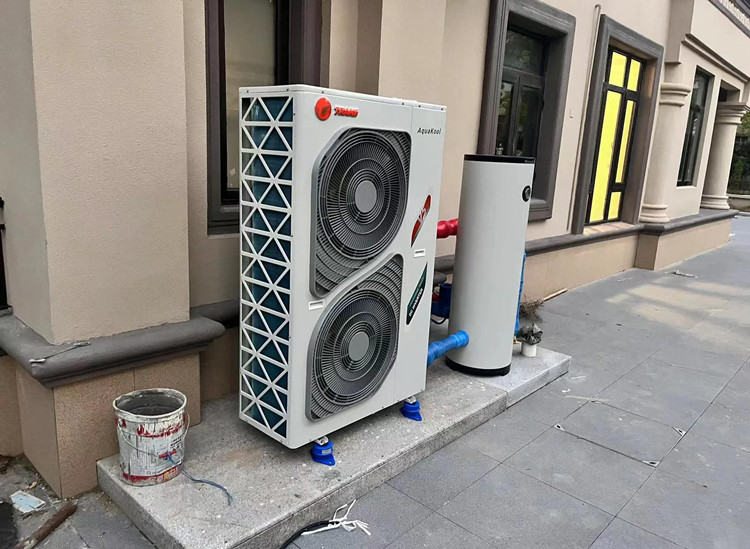
1. Air-to-water heat pumps: Yes, they usually require a water tank.
Air-to-water heat pumps extract heat from the outside air and transfer it to water; this heated water is used for both central heating (radiators or underfloor heating) and domestic hot water (taps and showers).
Why a tank is needed:
1) Slower heating speed: Heat pumps are designed for high energy efficiency rather than speed. Compared to traditional gas or electric boilers, heat pumps heat water much more slowly.
2) Lower output temperature: Heat pumps operate most efficiently at lower water temperatures (typically between 45°C and 55°C, whereas gas boilers usually operate above 60°C). To ensure a sufficient hot water supply during peak times (such as when multiple people take showers in the morning), the system must pre-heat and store a large volume of water.
3) Solution: Install a dedicated hot water storage tank (typically with a capacity of 200 to 300 liters—larger than a standard boiler tank) to store the heated water.
Note: Some modern "all-in-one" or "monobloc" heat pump units integrate the water tank directly into the indoor unit, saving some floor space, though the water storage function remains.
2. Air-to-air heat pumps: No, the heat pump itself does not require a water tank.
Air-to-air heat pumps extract heat from the outside air and blow warm air directly into the room via wall-mounted or ceiling-mounted fan units (very similar to a traditional split-system air conditioner). Hot Water Supply Method:
1) Since this system is designed solely for space heating, it is independent of your home's domestic water plumbing. Consequently, the heat pump unit itself does not require a water storage tank.
2) However, your household still requires hot water for daily use (e.g., taps and showers). You will need a separate system to meet this need. Common solutions include:
* Standard electric water heaters (storage-tank or tankless/instantaneous types).
* Gas or propane water heaters (if you are retaining a gas supply solely for hot water).
* Dedicated "heat pump water heaters" (compact, standalone units that function like miniature air source heat pumps to heat a small storage tank).
3. What if there is no space for a storage tank?
For homeowners—especially those living in smaller homes or apartments—the need for a large hot water storage tank is often a major deterrent to installing an air source heat pump. If space is limited, consider the following options:
1) Switch to an Air-to-Air system: Use an air-to-air heat pump for efficient zoned heating and cooling, while installing a compact, high-efficiency electric tankless (on-demand) water heater or a small heat pump water heater in a closet or utility cabinet to meet domestic hot water needs.
2) Thermal storage tanks/buffer tanks: In some complex systems, a "thermal storage tank" can be used. This is a highly insulated water storage vessel that often offers more flexible sizing and can even integrate with underfloor heating systems, although it still requires some dedicated space.
3) Tankless heat pump systems (less common): A few specialized, high-capacity heat pumps can heat domestic hot water "on demand," eliminating the need for a large storage tank. However, these units are expensive, have extremely high electrical load requirements, and generally offer lower energy efficiency than storage-based systems; therefore, they are typically not recommended for standard residential use.
4. Important Considerations for Heat Pump Hot Water Storage Tanks
If you choose to install an air-to-water heat pump system, do not simply use a standard hot water storage tank. The tank must be compatible with the heat pump system:1) Larger heat exchange coil: Since the hot water supplied by a heat pump is at a lower temperature, the internal heat exchange coil must be sufficiently large (or feature a "dual-coil" design) to transfer heat efficiently and rapidly to the stored water.
2) Legionella prevention: The tank must be equipped with a system (such as a built-in electric heater) capable of periodically raising the water temperature above 60°C to kill *Legionella* bacteria, as the heat pump's standard operating temperature is insufficient to meet this sterilization requirement.
3) Insulation performance: High-quality, thick insulation is essential to minimize heat loss and maintain the heat pump system's energy-efficiency advantages.
Summary and Recommendations
1. If you wish to completely replace your existing boiler and achieve seamless integration of whole-house heating (supporting radiators or underfloor heating) and domestic hot water supply, choose an "air-to-water" system (which requires a hot water tank).
2. If you prioritize rapid, zone-based heating and cooling and are willing to use a separate, compact unit (such as an electric water heater) for domestic hot water, choose an "air-to-air" system (which does not require a water tank for heating).