Air Source Heat Pump Electricity Consumption
The electricity consumption of an air source heat pump is not a fixed figure; unlike traditional electric heaters, it does not operate at a constant power output. Its core principle involves "transferring" heat from the air rather than generating heat directly; consequently, actual electricity consumption is influenced by a combination of factors.
Taking a well-insulated 100-square-meter home as an example, the total electricity consumption over a heating season of approximately four months is around 5,500 kWh (averaging about 46 kWh per day), with total winter electricity costs typically ranging from 3,000 to 5,000 RMB. In comparison, the operating cost of air source heat pump heating is only about 36% of that for direct electric heating, and it offers savings of roughly 50% compared to gas-fired wall-hung boilers.
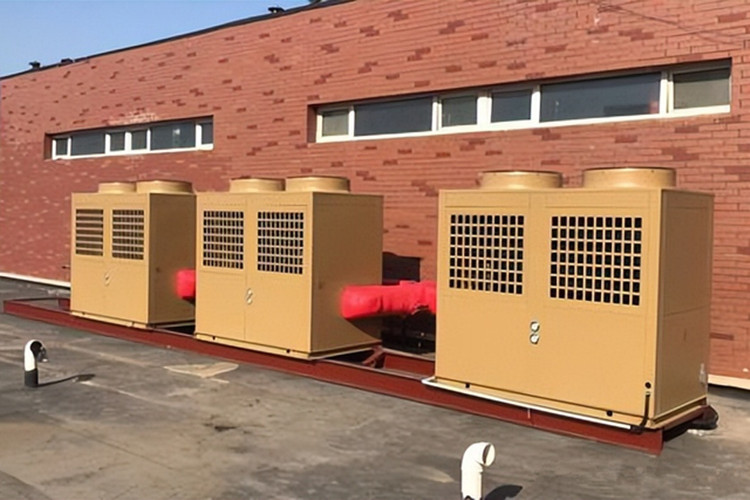
Regarding daily operation, the following key factors directly determine the electricity consumption of an air source heat pump:
1. House Insulation Quality
A building's thermal insulation performance significantly impacts electricity consumption. In a well-insulated home, heat loss is slow, allowing the heat pump to maintain the temperature while operating at a low frequency. Conversely, in poorly insulated homes, heat loss is rapid, forcing the heat pump to operate at high frequencies or even full load, which substantially increases electricity consumption. For instance, the same 5-horsepower heat pump unit might consume 40–50 kWh of electricity per day in a well-insulated house, whereas it could require over 80 kWh in a poorly insulated one.
2. Outdoor Ambient Temperature and Humidity
The Coefficient of Performance (COP) of an air source heat pump varies significantly with the air temperature. When the ambient temperature is relatively high (e.g., above 7°C), the system is highly energy-efficient, absorbing approximately 3.7 kW of heat for every 1 kWh of electricity consumed. However, as the temperature drops, the amount of extractable heat in the air decreases; combined with the electricity required for the defrosting process, overall consumption rises. For example, the COP is around 2.5 at -10°C but may drop to approximately 1.8 at -25°C, resulting in a 30%–50% increase in electricity consumption. Additionally, high ambient humidity increases the frequency of frost formation, further driving up energy consumption.
3. Type of Heating Terminal
Different indoor heat distribution systems have varying requirements for the heat pump's outlet water temperature, which directly affects operational efficiency. Underfloor heating is a low-temperature radiant heating system requiring an outlet temperature of only 35–40°C, allowing the heat pump to operate at peak efficiency. In contrast, traditional radiators typically require water temperatures above 55°C, forcing the compressor to work harder and resulting in higher electricity consumption. Generally, pairing the system with underfloor heating can save 10%–20% on electricity costs compared to using radiators.
4. Personal Usage Habits: Indoor temperature settings are closely linked to energy consumption.
Setting the indoor temperature to 18–20°C during winter strikes a balance between comfort and energy efficiency. Studies show that for every 1°C increase in indoor temperature, the heat pump's electricity consumption rises by 5%–8%. Smart controls can also be used effectively to save energy—for instance, by lowering the temperature when away from home and remotely pre-heating the space before returning.