Are Air Source Heat Pumps Worth It?
Whether an air source heat pump (ASHP) is a "good deal" depends largely on your existing heating system, local climate, electricity rates, and available subsidies. For most homeowners, however, the answer is generally yes—especially given the significant subsidies currently offered by federal and state governments.Below is a detailed analysis to help you evaluate whether an air source heat pump is the right choice for your home.
1. Upfront Costs and Subsidies
While the sticker price of a heat pump may seem high, various subsidies can significantly reduce your actual out-of-pocket (net) cost.
1) Installation Costs: The average installation cost for an air source heat pump ranges from approximately $3,500 to $7,500 for smaller or ductless systems, while a whole-home central system typically costs between $8,000 and $15,000.
2) Federal Tax Credits: Under the federal "Clean Energy Tax Credit," qualifying heat pump installations are eligible for a 30% tax credit, capped at $2,000 per year.
3) State and Utility Rebates: Within policy frameworks like the Inflation Reduction Act (IRA), households may also qualify for point-of-sale rebates (i.e., direct discounts). Households with an income below 80% of the Area Median Income (AMI) can receive up to $8,000 in rebates, while those with an income between 80% and 150% of the AMI can receive up to $4,000.
2. Operational Savings and Payback Period
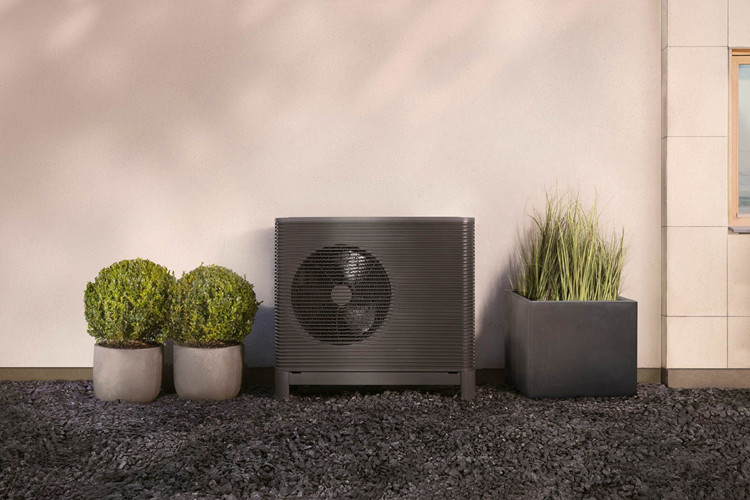
The primary economic advantage of a heat pump lies in its high energy efficiency. A properly installed air source heat pump can produce two to four times as much thermal energy as the electrical energy it consumes. The payback period depends entirely on the type of heating system you are replacing:
1) Replacing Electric Resistance, Oil, or Propane Heating Systems: In these cases, the advantages of a heat pump are particularly pronounced. For homeowners switching from expensive fuels—such as heating oil or propane—to a heat pump, the significant monthly energy savings typically allow for a full return on investment within 5 to 10 years.
2) Replacing natural gas: The return on investment (ROI) is generally lower. Because natural gas is relatively inexpensive in many regions, switching to a heat pump may not necessarily reduce your monthly energy bills—unless local electricity rates are exceptionally low or you have installed solar panels. However, a "dual-fuel" (hybrid) system—which combines a heat pump with a gas furnace—can automatically switch to the most cost-effective fuel source based on the outdoor temperature, maximizing energy savings.
3) Replacing an aging air conditioner: If your current air conditioner is nearing the end of its lifespan, upgrading to a heat pump often requires only a modest additional investment compared to replacing it with a standard air conditioner. Given that heat pumps provide both cooling and heating, this is a highly sensible and straightforward choice.
3. Performance in Cold Climates (Common Concerns)
While early heat pump models struggled in freezing weather, technology has advanced significantly.
1) Cold-climate-specific models: Modern "cold-climate air source heat pumps" (ccASHPs) are independently tested and verified to operate efficiently even at temperatures well below freezing—often down to -15°F (-26°C) or lower.
2) Serving as the sole heating source: Data shows that many homeowners in cold climates have successfully relied on ccASHPs as their only source of heating. Nevertheless, in the event of extreme cold snaps—such as those caused by a "polar vortex"—installers may still recommend adding a small auxiliary electric heating element or opting for a hybrid system.
4. Summary of Pros and Cons
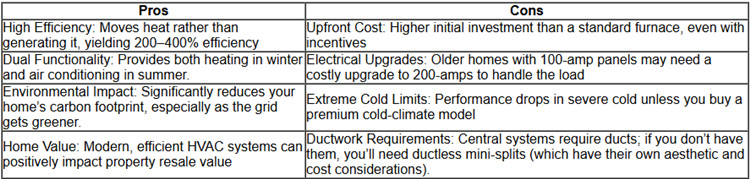
5. Evaluation Checklist: Is It Worth It for You? Before making a decision, ask yourself the following four questions:
1) How is your home currently heated? If you use heating oil, propane, or electric baseboard heaters, installing a heat pump is almost certainly a highly cost-effective choice. If you use relatively inexpensive natural gas, consult a local contractor to run a detailed cost analysis.
2) How well-insulated is your home? Heat pumps perform best—and most efficiently—in homes that are well-insulated and airtight. This is because heat pumps provide heating at lower, more consistent temperatures, which differs from the "full-blast" heating approach of a gas furnace.
3) Do you happen to need a replacement for your air conditioning system? If so, the additional cost to upgrade to a heat pump is minimal, making it a very worthwhile consideration.
4) What local incentives are available? You can check the DSIRE database or use the heat pump calculator on the "Rewiring America" website to determine the specific subsidies available based on your zip code and income level.
Bottom Line
If you can take advantage of a 30% federal tax credit along with local subsidies—and you happen to need to replace an expensive heating system (or an aging air conditioner)—installing an air source heat pump by 2026 is a highly economical move. It not only future-proofs your home and reduces your carbon footprint, but also provides reliable, efficient comfort year-round. Be sure to obtain quotes from 2–3 qualified installers and ask them to perform a "Manual J" load calculation to ensure the selected equipment is perfectly sized for your home’s specific needs.